

3 November 2026 · NDIS participant guide
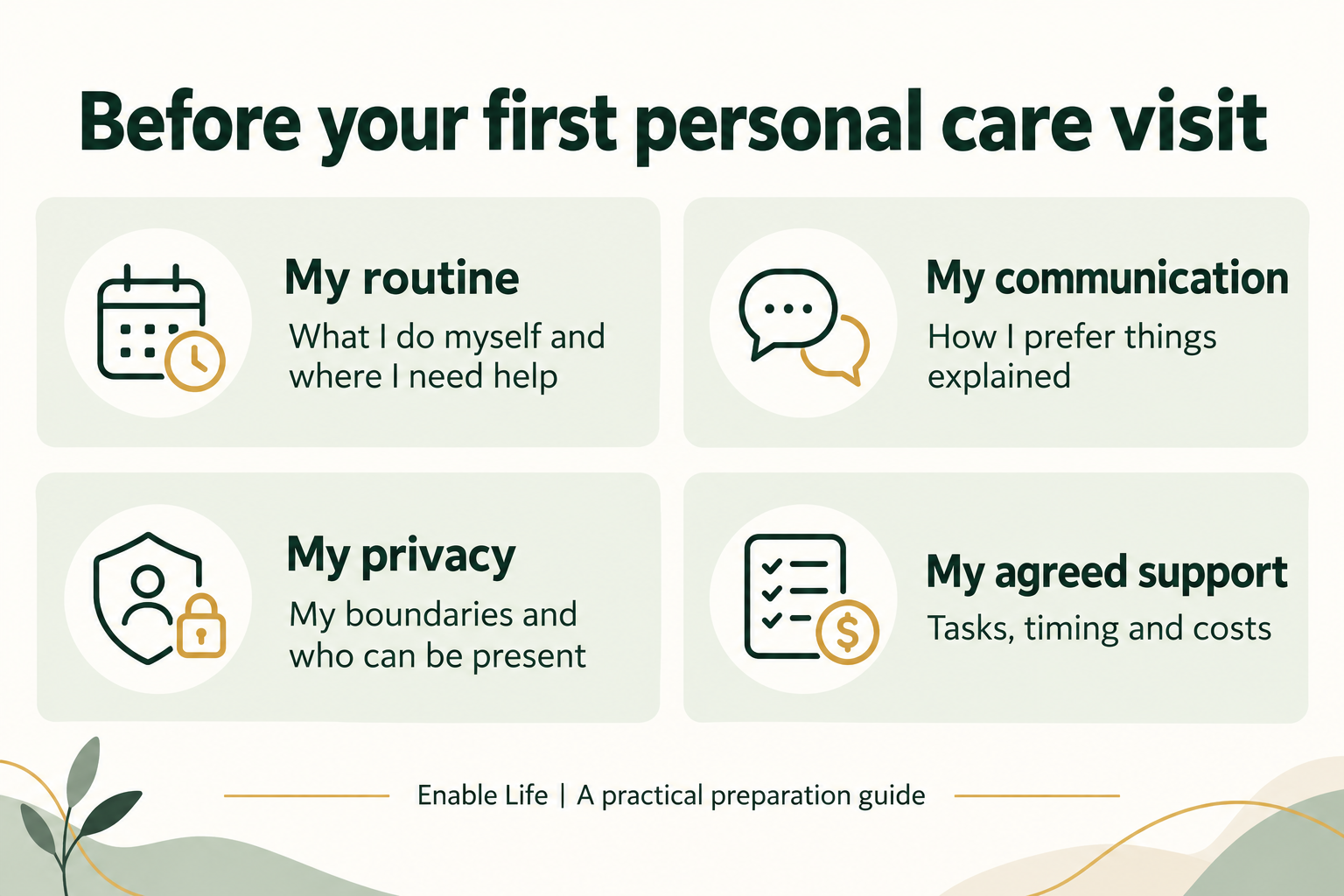
Before your first NDIS personal care visit, discuss the assistance you need, your preferred routine, privacy boundaries and how you want the worker to communicate with you. Confirm the agreed tasks, timing and costs with your provider.
Welcoming someone into your home to assist with personal activities can feel unfamiliar. You do not need to have every detail worked out beforehand. A few clear preferences can help start the conversation.
What can personal care support involve?
Personal care support may involve assistance with activities such as washing, dressing and grooming. The assistance should reflect your needs and the supports your funding covers.
The NDIA explains that personal care assistance depends on individual needs, while working arrangements depend on your goals and plan. Read its guidance on what a support worker can help with.
Before the visit, confirm which activities your provider has agreed to assist with. Explain any relevant professional instructions, equipment or specialist assistance requirements so the provider can assess suitable arrangements.
What should I discuss before my first NDIS personal care visit?
Start with the parts of your routine that matter most.
You could explain:
- What you can and prefer to do independently.
- Which activities require assistance.
- The order in which you like to get ready.
- How you communicate discomfort or ask for a break.
- Cultural, language or worker preferences.
- Relevant instructions the worker needs to understand.
Ask the provider to confirm how these preferences will be recorded and shared with the worker.
How can I make my privacy preferences clear?
Privacy includes personal boundaries during support, as well as how information is handled.
The NDIS Commission explains that providers should understand and document a person’s privacy preferences and deliver support in ways that respect their choices and dignity. See its guidance on privacy during disability support.
Practical preferences might include:
- Knocking and waiting before entering a room.
- Closing doors or curtains during personal care.
- Explaining a task and checking your agreement before beginning.
- Asking before touching belongings.
- Confirming who you want present.
You can write these down, discuss them verbally or use your preferred communication method.
A practical example: getting ready for an appointment
This is a hypothetical example, not a participant testimonial.
Morgan has an appointment and wants assistance with dressing before leaving home.
Before the first visit, Morgan explains that choosing clothes independently is important, but some fastenings are difficult. Morgan also prefers one instruction at a time and needs extra time to respond.
The provider confirms the agreed assistance and visit time. When the worker arrives, they check Morgan’s preferences before beginning and ask which steps Morgan wants to complete independently.
Afterwards, Morgan explains what worked well and asks for a little more time between tasks at the next visit.
What should happen when the worker arrives?
Use the first few minutes to confirm the plan for the visit.
A simple starting conversation could be:
“Today I would like help with these tasks. I want to do these parts myself. Please explain before helping and check with me if anything changes.”
Ask the worker to clarify anything you do not understand. If the proposed assistance differs from what you agreed, contact the provider to resolve it.
What should I check about timing and costs?
Confirm the visit length, agreed rate, any additional charges and what happens if the worker is delayed or you need to cancel.
Request a copy of the service agreement in a format you understand. Our NDIS service agreement checklist provides further questions to discuss.
Check that the proposed assistance fits your plan before committing. Ask your my NDIS contact if you need clarification about funding.
The NDIA explains that funding must be used for disability-related NDIS supports that are consistent with your plan. See its guidance on what NDIS funding can be used for.
Exploring personal care support in Melbourne
If you are exploring personal care support in Melbourne, describe the assistance you need alongside the routines and choices you want to maintain.
Read about Enable Life’s Daily Personal Activities service to discuss your preferences and suitable arrangements.
After your first visit, tell the provider what worked and what needs adjusting. These details can help shape future support.
If your routine also involves leaving home, you can explore Assistance in Travel and Transport and Community Participation. For other everyday needs, read about Household Tasks Support and Development of Daily Living Life Skills.
Next reading: NDIS transport funding explained.
Speak with Enable Life Disability Services
Discuss your personal care needs, preferences and appropriate next steps with our team.
Phone: 03 7020 4849
Email: support@enablelife.com.au
Contact Enable Life
Frequently asked questions
1. Can someone I trust join the first visit?
Tell your provider if you would like a family member, friend or advocate present. Discuss their role and which parts of the visit you want them involved in.
2. Can I explain my preferences in writing?
Yes. A short written list, communication aid or other accessible format can help explain your routine. Ask how the provider will make this information available to the worker.
3. Can I ask for a worker with particular characteristics?
Explain preferences that affect your comfort, communication or cultural needs. Ask the provider what matching arrangements are available rather than assuming a particular worker can be supplied.
4. What if I feel uncomfortable during the visit?
Tell the worker that you want to pause and explain what needs to change. Contact the provider if your concern is unresolved. You can also seek advice through the NDIS Commission’s complaints information.
This article provides general information as at 3 November 2026 and does not confirm individual funding eligibility or replace an individual support assessment.