

1 November 2026 · NDIS participant guide
Understanding NDIS transport funding can help participants plan everyday journeys and community activities. This guide explains recurring transport funding, the three funding levels, support-worker assistance and important questions to ask before arranging travel.
Getting to work, attending community activities, visiting friends or participating in social events can be an important part of everyday independence.
However, travelling is not always straightforward for people living with disability.
Some people may have difficulty using public transport independently. Others may need assistance from a support worker to access activities safely and confidently.
The National Disability Insurance Scheme (NDIS) can fund certain disability-related transport and travel supports when they meet the applicable funding rules.
But how does NDIS transport funding work? Who is eligible? And what is the difference between transport funding and assistance from a support worker?
Here is a practical guide for participants and families.
What Is NDIS Transport Funding?
NDIS transport funding can help eligible participants pay for certain travel expenses related to their disability and approved support needs.
The NDIA explains that recurring transport supports may help participants travel to:
- Work or study.
- Community activities.
- Day programs.
- Social and recreational activities.
- Other eligible activities connected to their circumstances.
These supports may cover taxis, rideshare services and other private travel arrangements.
However, NDIS transport funding is not automatically included in every participant’s plan.
The NDIA considers individual needs, disability-related barriers to travel and available informal or community assistance when deciding whether transport support is appropriate.
Participants should check their own approved plan rather than assume that every journey can be funded. NDIS recurring transport guidance
What Are the Three NDIS Transport Funding Levels?
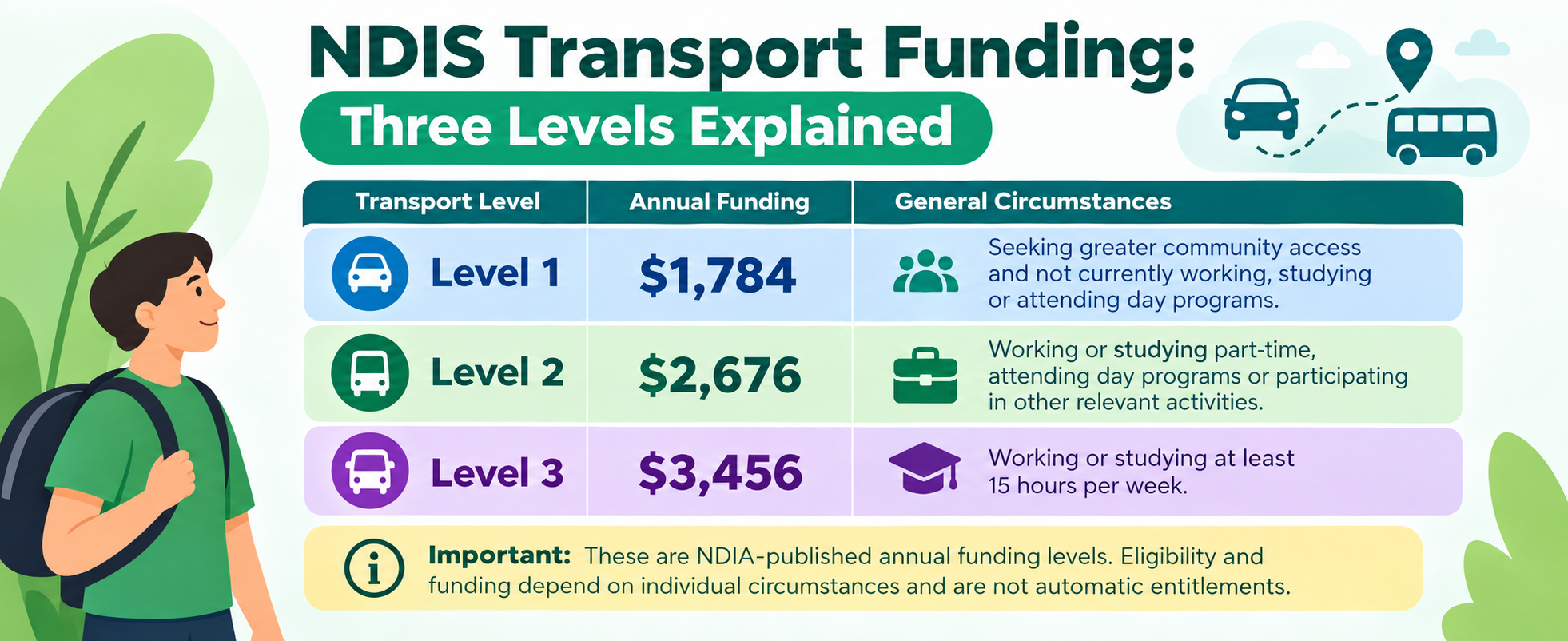
The NDIA currently identifies three levels of recurring transport support.
These levels help determine funding for eligible participants based on their circumstances.
These amounts are the funding levels published in the NDIA’s guidance, current as at 28 May 2026.
They are not automatic entitlements.
The NDIA determines eligibility and the appropriate funding arrangements based on individual circumstances.
If you are unsure whether transport funding should be included in your plan, contact your my NDIS contact for guidance. NDIS recurring transport guidance
Where Can You Find Transport Funding in Your NDIS Plan?
NDIS plans have four broad support budgets:
- Core supports.
- Capacity building supports.
- Capital supports.
- Recurring supports.
Recurring transport funding is included in the recurring supports budget for eligible participants.
Your plan may not contain funding in every support budget because the funding is based on your individual support needs.
The NDIA explains that recurring transport is the only category within recurring supports.
Eligible transport funding may be paid regularly into a participant’s nominated bank account or claimed through the participant portals or my NDIS app, depending on the arrangements that apply.
If you are uncertain about the funding available, you can review your plan or contact the NDIA. NDIS support budget guidance
What Is the Difference Between Transport Funding and Support Worker Assistance?
This is one of the most important distinctions for NDIS participants.
Transport funding generally relates to eligible travel costs, such as taxis, rideshare services or other private transport.
Support worker assistance involves a worker providing disability-related support so a participant can access an activity or participate in the community.
For example, a participant might need assistance from a support worker to travel to an activity, navigate an unfamiliar environment or participate safely in a community program.
The NDIA explains that core supports can fund eligible support-worker assistance with everyday activities and community participation.
However, paying for a journey and paying for a worker’s assistance are not necessarily the same NDIS expense.
Different funding categories, support items and pricing rules may apply.
A provider may also charge certain agreed travel-related costs where permitted under the relevant NDIS pricing arrangements.
Before arranging transport assistance, ask your provider to explain which services and costs are included and how they would be funded. NDIS core supports guidance
Can NDIS Funding Help With Community Activities?
For eligible participants, NDIS-funded supports may help make community participation more accessible.
Community activities can provide opportunities to develop confidence, maintain social connections and practise everyday skills.
Depending on an individual’s approved funding and support needs, assistance might involve travelling to an agreed community activity, participating in a recreational program or receiving disability-related support while accessing community facilities.
For example, a participant may want to attend a weekly social group.
They might need assistance with planning the journey, travelling safely and participating in the activity.
Where these supports meet the applicable NDIS requirements, suitable funding may be available.
However, ordinary personal expenses are not automatically funded simply because they relate to an activity.
Participants should check whether transport charges, support-worker time and other expenses are covered under their particular arrangements.
Can NDIS Fund Transport to Medical Appointments?
This depends on the circumstances.
The NDIS does not automatically fund every journey to a doctor, hospital or other healthcare appointment.
Australia’s mainstream health and transport systems continue to have responsibilities for many services.
NDIS funding may be relevant when transport assistance is disability-related and meets the applicable NDIS funding criteria.
For example, a participant may require assistance because their disability substantially affects their ability to travel independently.
However, that does not mean every medical journey or associated expense is an NDIS-funded support.
Participants should discuss their individual circumstances with the NDIA or an appropriate plan-management contact rather than relying on a general rule.
Five Things to Check Before Arranging NDIS Travel Support
Understanding your arrangements before travel begins can help prevent unexpected costs or misunderstandings.
1. Check Your Available Funding
Review your current NDIS plan and identify the transport or community participation supports available to you.
Do not assume that funding in one support budget can automatically be used for any other type of expense.
2. Explain the Assistance You Need
Consider what makes travelling difficult and what assistance would help you.
For example, you may need help planning a journey, travelling with someone or accessing a community activity.
Being clear about your needs can help identify suitable support arrangements.
3. Understand the Charges
Ask your provider to explain any proposed charges for support-worker time, transport, kilometres, parking or other applicable expenses.
These costs may be treated differently under NDIS rules.
4. Discuss Safety and Accessibility
Explain any important accessibility requirements or personal preferences.
Do not assume that a provider has specialised vehicles or equipment unless this has been confirmed.
5. Confirm the Arrangements Before Travel
Make sure you understand the agreed journey, support times, costs and cancellation arrangements.
A written service agreement may help document these details.
How Transport Support Connects With Everyday Independence
Travel and community access are often connected to other aspects of daily life.
For example, someone developing daily living skills may want to practise planning journeys or using familiar transport options.
Another participant may need assistance with personal activities before leaving home.
Some people may arrange household support to help maintain their routines alongside regular community activities.
These different forms of assistance can work together to support individual goals.
However, the specific activities and expenses that NDIS funding can cover depend on each participant’s plan and the relevant funding rules.
The NDIA’s guidance emphasises that NDIS funding must be used for eligible supports related to the participant’s disability and consistent with their plan. NDIS guidance on using your funding
How Enable Life Supports Everyday Independence
At Enable Life Disability Services, we understand that accessing everyday activities and community opportunities can be important for independence and wellbeing.
We provide disability support services across Melbourne, including:
Assistance in Travel and Transport: Support with agreed journeys and travel arrangements.
Community Participation: Assistance with accessing community activities, developing interests and building social connections.
Development of Daily Living Life Skills: Support with learning and practising practical everyday skills.
Daily Personal Activities: Assistance with agreed personal routines and daily activities.
Household Tasks Support: Help with household activities such as cleaning and laundry.
Our approach focuses on understanding each person’s needs, preferences and goals.
Participants and families can contact our team to discuss the services we provide and the practical arrangements that may suit their circumstances.
For confirmation about NDIS funding eligibility or approved plan budgets, participants should contact the NDIA.
Speak With Enable Life Disability Services
If you are looking for disability support across Melbourne, Enable Life can discuss your individual requirements.
Whether you need help accessing community activities, assistance with travel arrangements or support with everyday routines, understanding your options is an important first step.
Contact Enable Life Disability Services
Phone: 03 7020 4849
Email: support@enablelife.com.au
Website: enablelife.com.au
Our team can explain the services available and discuss appropriate next steps.
Frequently Asked Questions
1. How much NDIS transport funding can I receive?
The NDIA identifies three general recurring transport funding levels: $1,784, $2,676 and $3,456 annually.
These are published funding levels rather than guaranteed amounts. Eligibility and funding depend on individual circumstances.
2. Can I use NDIS transport funding for taxis or rideshare services?
Eligible recurring transport funding may be used for taxis, rideshare services and other private transport arrangements that meet the relevant requirements.
Check the funding in your individual plan.
3. Does NDIS pay for a support worker to accompany me to community activities?
Eligible core supports may fund disability-related support-worker assistance with community activities.
Whether the assistance can be funded depends on the participant’s circumstances, approved funding and applicable NDIS rules.
4. Is transport funding automatically included in every NDIS plan?
No.
Recurring transport funding is included for participants assessed as eligible for that support.
Your plan may have no funding allocated to recurring transport.
5. Can I use my community participation funding to pay for every transport expense?
Not necessarily.
Support-worker assistance, transport fares and other travel charges may involve different funding arrangements.
Check the relevant support items and pricing rules before agreeing to charges.
This article provides general information as at 1 November 2026. It does not replace advice about an individual’s NDIS plan, funding eligibility or support arrangements.
Official NDIS resources for readers:
NDIS — What Are Recurring Supports?