

6 November 2026 · Choosing an NDIS support worker
Yes. The NDIA says you can choose who you work with, the kind of support you receive and when it is delivered. Choosing an NDIS support worker involves discussing your needs and preferences alongside the worker’s suitability and availability.
Read the NDIA’s explanation of your choices when working with a support worker.
A suitable working relationship starts with being heard. You might value clear communication, experience with particular tasks, shared language or someone who understands your preferred routine.
What matters when choosing an NDIS support worker?
Start with the assistance you need and how you want it provided.
A worker who suits one person may not suit another. Friendly conversation can help you feel comfortable, but also discuss practical experience, reliability, boundaries and the activities involved.
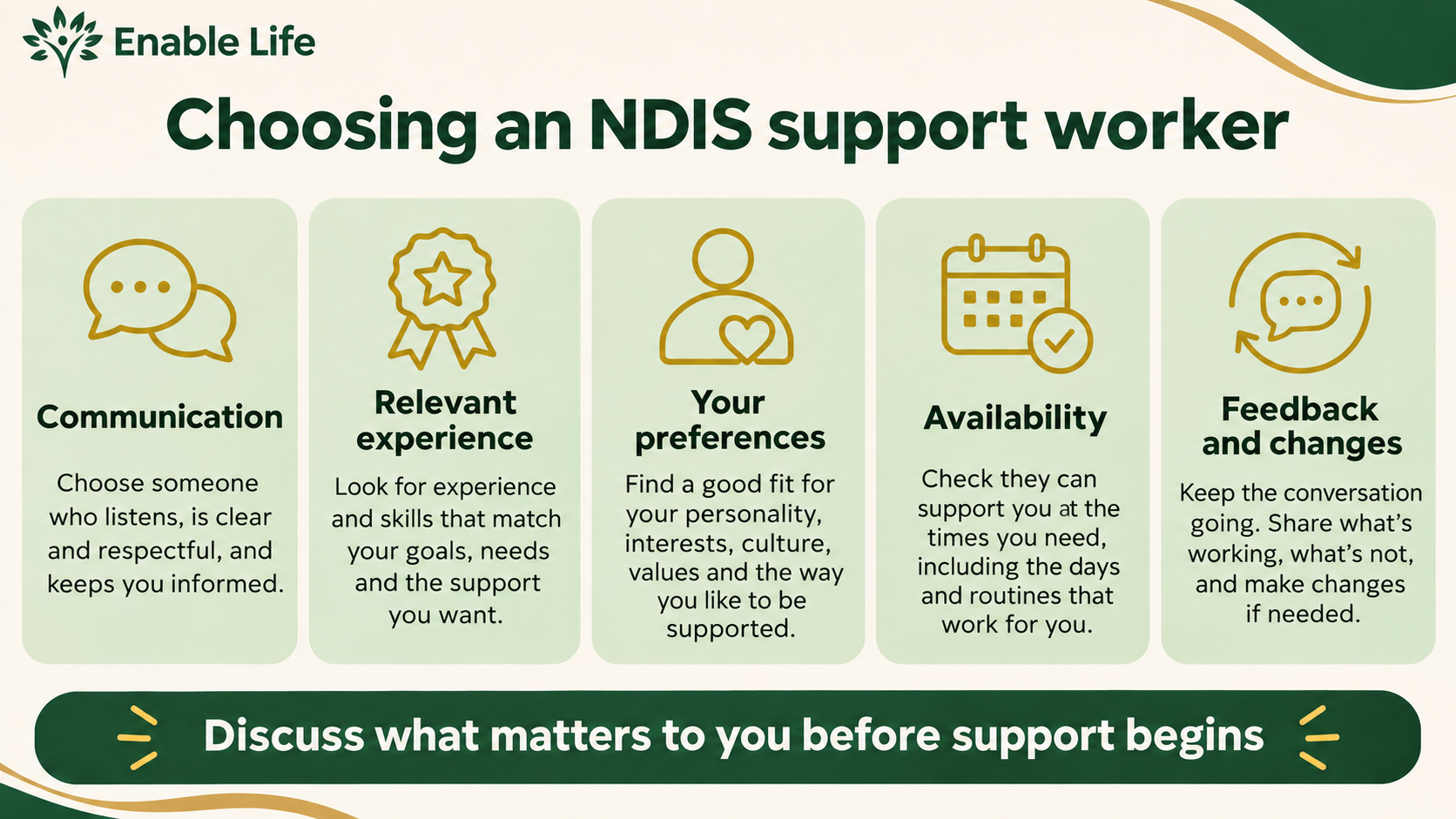
These five topics can help guide the conversation.
1. Communication that works for you
Explain how you prefer information to be shared.
You might want one instruction at a time, written reminders, pictures, extra time to respond or assistance using a communication aid.
Ask how the worker would check that they have understood your choices. You should have room to ask questions and explain when something is unclear.
2. Experience with the assistance you need
Describe the actual tasks involved rather than relying on a general description such as “help at home”.
For example, you may need assistance with dressing, household activities or attending a community group. Ask about relevant experience and how the provider checks that workers can deliver the agreed support safely.
The NDIA also recommends checking that support workers have completed an NDIS worker screening check. Its support-worker guidance explains this recommendation.
3. Your preferences and personal boundaries
Tell the provider about preferences that affect your comfort, communication or cultural needs.
You can discuss language, worker characteristics, privacy and the parts of a task you prefer to do yourself. Ask what matching options are available.
Be clear about everyday boundaries, such as asking before moving belongings or checking before helping with a personal activity.
The NDIS Commission’s Code of Conduct requires workers and providers to respect individual decision-making and privacy and deliver support safely and competently.
4. Availability and continuity
Discuss the days, times and visit length you need.
Ask what happens when your usual worker is unavailable, how much notice you will receive and how a replacement worker will learn about your preferences.
Requesting a particular worker does not guarantee that person will always be available. Understanding the provider’s arrangements helps you decide whether they suit your routine.
5. How feedback and changes will be handled
Ask who to contact if something is not working.
You might need a different communication approach, a change in timing or another worker. Discuss how requests are considered and any notice or cancellation arrangements that apply.
Keep a copy of the agreed arrangements. Our NDIS service agreement checklist provides further questions to ask before support begins.
A practical example: finding the right communication approach
This is a hypothetical example, not a participant testimonial.
Nelly wants assistance attending a local photography group. She enjoys taking pictures but finds unfamiliar introductions difficult.
When discussing support, Nelly explains that she prefers time to answer questions and wants to speak for herself wherever possible.
She asks how a worker would assist if she became unsure during the session. The provider discusses an approach in which the worker waits, offers a prompt when requested and checks before speaking on Nelly’s behalf.
Nelly also asks about availability and how she can give feedback after the first visit.
The conversation helps clarify the support she wants before arrangements are finalised.
What if the match does not feel right?
Identify what needs to change, where you can.
For example, explain that instructions are too fast, the agreed tasks are unclear or visits are not happening at a suitable time. Ask the provider how they will address the issue and when they will follow up.
If your concern involves the safety or quality of support, you can also contact the NDIS Commission through its complaints information. You do not need to wait for a routine review to raise a concern.
Discussing disability support workers in Melbourne
When exploring disability support workers in Melbourne, describe both the assistance you need and how you prefer to receive it.
If your priority is everyday personal routines, explore Enable Life’s Daily Personal Activities service.
If you want assistance attending activities or pursuing interests, read about Community Participation support.
Contact the team to discuss your preferences, available arrangements and appropriate next steps.
Frequently asked questions
Can I ask to meet a worker before regular support starts?
Ask whether an introductory conversation or meeting is available. Confirm whether it involves a charge before arranging it.
Can someone I trust help me choose?
You can ask a family member, friend or advocate to help you prepare questions or join discussions. Explain how you want them involved and which decisions you want to make yourself.
Can I request a different worker?
Raise the request with your provider and explain your preferences or concerns. Ask about available alternatives and the arrangements for making a change.
Does a shared interest mean someone is the right worker?
A shared interest may help conversation, but also consider relevant skills, communication, boundaries, availability and the assistance you need.
Should I discuss costs before choosing an NDIS support worker?
Yes. Confirm rates, visit length, additional charges and cancellation arrangements before agreeing to services.
This article provides general information. Support arrangements must reflect your individual needs, plan and applicable requirements.