

Updated: 28 October 2026
An NDIS service agreement checklist helps you discuss what support you will receive, what it will cost and how arrangements can change. Before finalising an agreement, make sure you understand the services, charges, cancellation conditions and who to contact with questions.
If you are looking for an NDIS provider in Melbourne, this checklist can help you compare proposed support arrangements and prepare questions before choosing a provider.
You can ask for information in a format that works for you and discuss terms you would like changed.
What is an NDIS service agreement?
A service agreement records the arrangements between a participant and a provider. It explains the NDIS supports they have agreed on.
It is separate from your NDIS plan. Your plan and your agreement serve different purposes: one sets out your approved funding arrangements, while the other describes the support arrangements with a particular provider.
The NDIA recommends service agreements when starting with a new provider or when needs change. Read the NDIA’s explanation of service agreements.
NDIS service agreement checklist: questions to ask
Use these questions to guide your conversation:
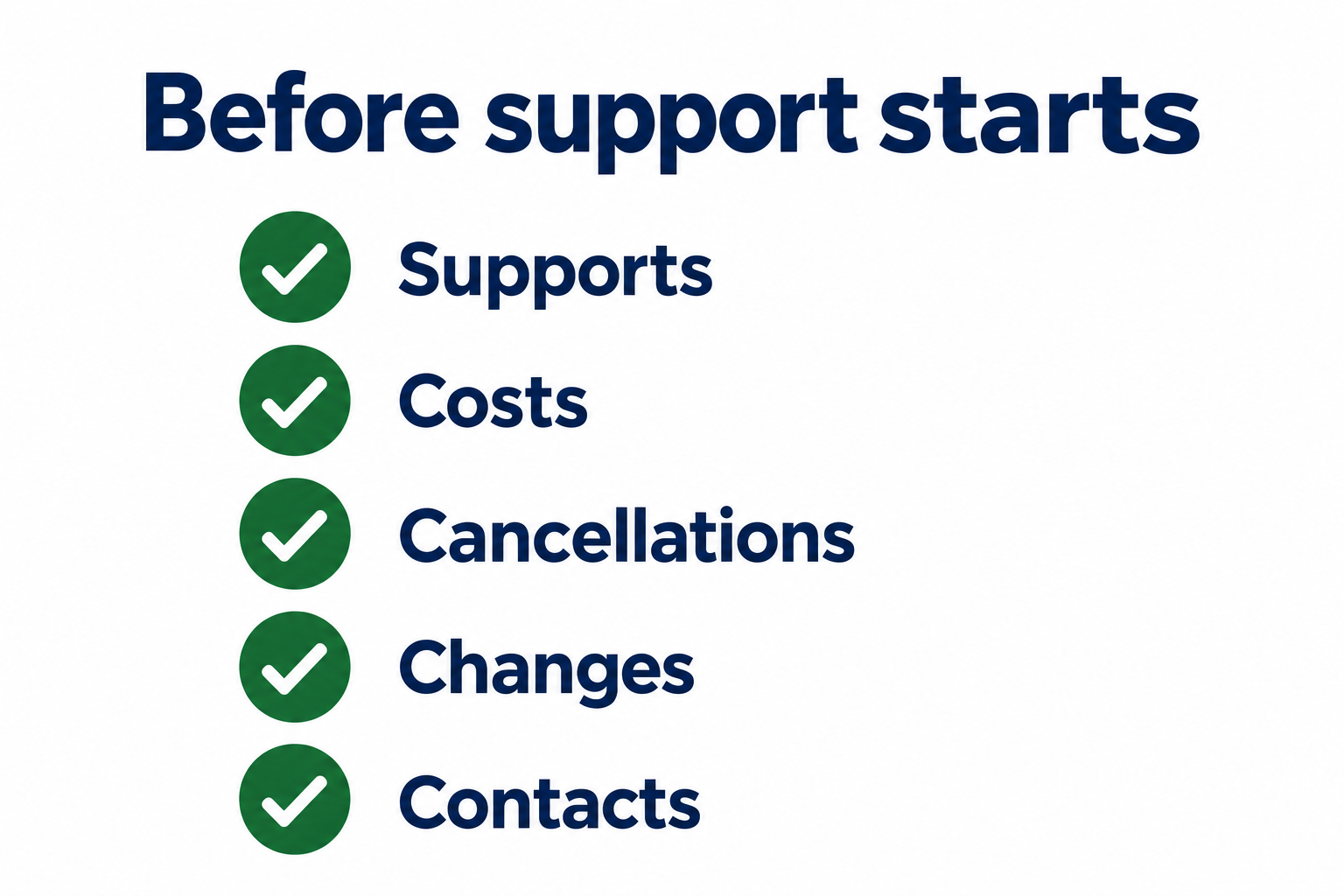
- What support are we agreeing to? Ask for a clear description of the tasks, hours, frequency and location.
- What will I pay? Discuss rates, how invoices work and any additional charges.
- What happens if a visit is cancelled? Check notice requirements, possible fees and what happens if the provider cancels.
- How can arrangements change? Ask how to review, vary or end the agreement.
- Who should I contact? Identify the person who handles everyday questions and the process for raising concerns.
- Can I have a copy of the service agreement? Ask your provider for a copy to review before agreeing, in a format you can understand. Once finalised, request a copy of the agreed version and keep it somewhere accessible. Ask for an updated copy whenever the arrangements change.
The NDIA’s guide to making a service agreement provides more detail about these discussions.
A practical example: attending a community art group
Imagine you would like support to attend a local art group and feel more comfortable meeting new people.
Before agreeing to the arrangements, discuss what assistance would be useful. You might want help preparing for the outing, getting to the venue or settling into the activity.
Use your NDIS service agreement checklist to clarify:
- Whether travel time and support during the activity are included.
- The agreed hours and any additional costs.
- Whether activity entry fees or materials are separate expenses.
- Who to contact if the group is cancelled or you cannot attend.
- When you will review whether the arrangement suits your goals.
Ask which costs would be your responsibility and check any proposed NDIS-funded charges against your individual plan.
This is an illustrative example, not an actual participant’s experience or a promise of funding.
Explore Enable Life’s Community Participation service to learn about support you can discuss with our team.
Make the information accessible to you
An agreement should help you understand your arrangements.
Ask for unfamiliar terms to be explained. You might prefer to review the information in smaller sections, use an accessible format or involve someone you trust.
The NDIA says participants can request understandable wording and their preferred format, and ask the provider to arrange an interpreter when needed. Its guidance also explains that participants can ask to change terms to suit their needs. See the official guidance.
Where can I find official resources?
On 13 October 2026, the NDIA announced a service agreement template, checklist, guidance and Easy Read resources.
Using its template is optional. If used, it should be adapted to the participant’s and provider’s arrangements. View the NDIA’s service agreement resources announcement.
Community participation support in Melbourne
Looking for community participation support in Melbourne? Explore Enable Life’s Community Participation service and discuss the activities, goals and assistance that matter to you.
A useful first conversation starts with what you want help with and how you prefer support to work. Ask about the proposed services, availability, costs and next steps before agreeing to arrangements.
Call Enable Life on 03 7020 4849 to talk about the support you are seeking.
You can also explore our Daily Personal Activities service or visit our NDIS resources for more background information.
Frequently asked questions
Is a service agreement the same as my NDIS plan?
No. A service agreement describes arrangements with a provider; it is separate from your NDIS plan.
What should I ask an NDIS provider before starting support?
Ask what support will be provided, the agreed hours, rates, additional charges, cancellation conditions and who to contact if your arrangements need to change.
Can I ask for changes before agreeing?
Yes. The NDIA says you can discuss changes to terms with your provider.
Must I use the NDIA’s template?
No. The NDIA’s template is optional and should be tailored if used.
What should a community participation service agreement explain?
It should clearly describe the agreed assistance, timing and costs. For an outing, clarify transport arrangements, any separate activity expenses and what happens if a session is cancelled.
Where can I find accessible information?
The NDIA provides Easy Read service agreement resources. You can also ask your provider for information in a format you understand.
This article provides general information as at 28 October 2026. Check official NDIA guidance and seek advice about your individual circumstances when needed.