

Updated: 27 October 2026
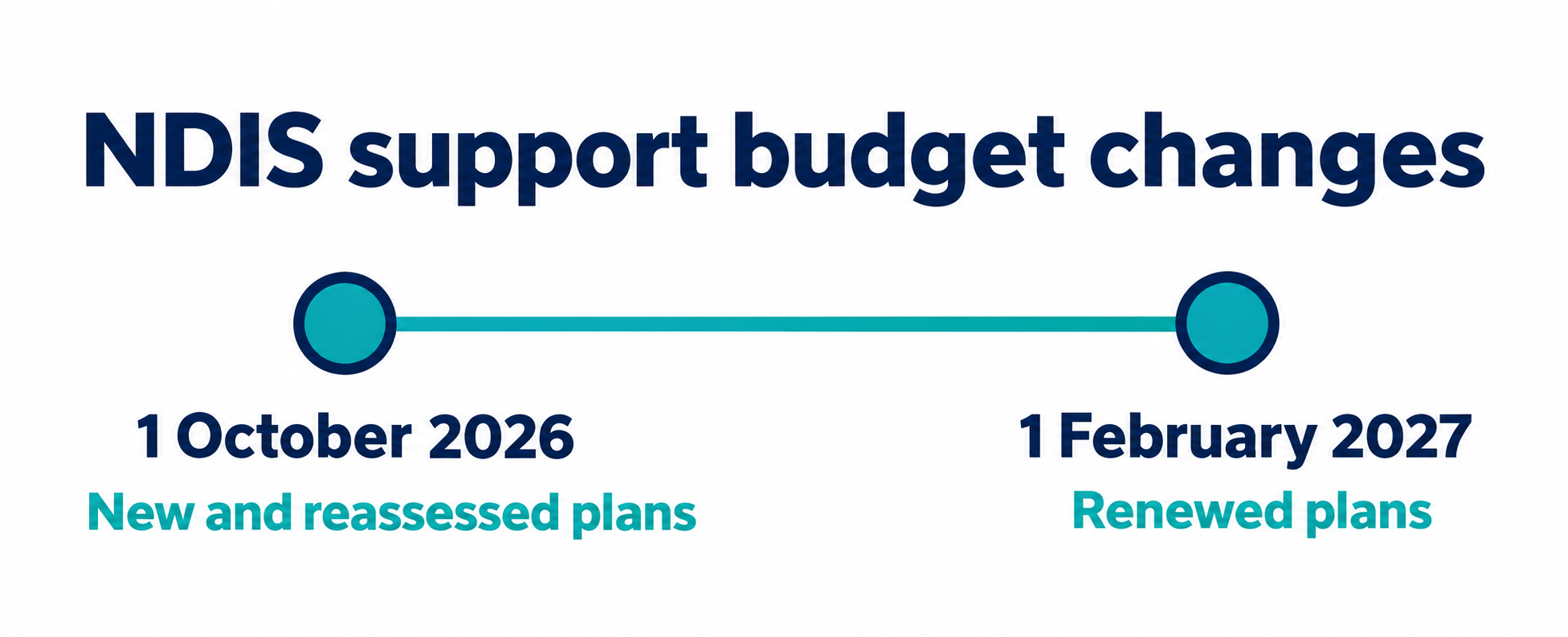
NDIS budget changes October 2026: changes to some participant support budgets apply to relevant new and reassessed plans from 1 October 2026, and renewed plans from 1 February 2027. Essential day-to-day supports such as help with dressing, toileting, laundry and cleaning are excluded from these announced reductions. The effect on each participant depends on their individual plan.
If you or someone in your family receives NDIS funding, you may be wondering what these changes mean for everyday activities, community participation and disability support services.
At Enable Life Disability Services, we believe people should have clear, accessible information to help them make informed choices about their support.
Here is what you need to know about the latest NDIS budget changes.
NDIS budget changes October 2026: what has changed?
On 1 October 2026, the National Disability Insurance Agency (NDIA) began introducing funding reductions affecting two support categories:
- Social, Economic and Community Participation
- Improved Daily Living Skills
The changes are part of legislation passed in August 2026.
According to the NDIA, the reductions will be introduced progressively as participant plans are created, reassessed or renewed. The impact will vary because every participant has different goals, circumstances and support needs.
Importantly, this does not mean every participant will immediately lose funding or that all disability supports are being reduced.
When do the October 2026 NDIS budget changes apply?
The NDIA has confirmed two important dates.
From 1 October 2026: The changes apply when relevant new plans are approved or existing plans are reassessed.
From 1 February 2027: The changes begin applying when existing plans are renewed.
The reductions are being phased in over approximately 12 months rather than applying to everyone’s plan at once.
For participants, this means the timing of a new or updated plan is important.
You should review your individual plan rather than assume that a general announcement automatically changes your available funding.
Which everyday NDIS supports are not affected?
The NDIA has confirmed that a number of essential day-to-day supports are excluded from these reductions.
These include assistance with eating and drinking, dressing, toileting, laundry and cleaning.
The NDIA has also identified other exclusions, including certain disability-related health, employment and high-intensity supports.
It has published a detailed list of excluded support items within the affected categories.
For people who rely on assistance with daily personal activities or household tasks, this distinction is particularly important.
However, the funding available for any individual service still depends on the participant’s approved plan and the applicable NDIS rules.
What about community participation and daily living skills?
Community participation and developing everyday life skills can play an important role in helping people live more independently.
NDIS participants may use relevant funded supports to work towards goals such as building confidence, joining community activities, developing practical skills and connecting with others.
Because some funding within the Social, Economic and Community Participation and Improved Daily Living Skills categories is affected, participants may need to pay particular attention to these parts of their plans.
It is important to distinguish between the name of a service and the specific NDIS support item used to fund it.
Not every activity described as community participation or daily living skills will necessarily be affected in the same way.
The NDIA’s published support-item information and each participant’s approved plan should be used to understand the actual impact.
Five practical steps participants can take
There is no need to assume that your current support arrangements must change immediately.
However, it can be helpful to prepare before your next plan reassessment or renewal.
1. Review your current NDIS plan. Check your funding categories, available balances, funding periods and plan reassessment date.
2. Identify your important everyday supports. Consider which activities and services are essential to your wellbeing, safety and independence.
3. Check the relevant support items. If you are unsure whether a particular service is affected, seek clarification about the exact NDIS funding category and support item.
4. Discuss your arrangements with the appropriate people. Your my NDIS contact or plan manager may be able to help clarify funding arrangements. Your service provider can explain the support arrangements and costs it offers.
5. Keep information about significant changes in your needs. If your disability-related support needs or circumstances change substantially and continue over time, contact the NDIA about your options.
The NDIA confirms that participants can still request changes to their plans where there have been significant and ongoing changes in circumstances or support needs.
Can participants request changes if their support needs increase?
Yes, in certain circumstances.
The NDIA has explained that participants may still request a plan variation or reassessment where significant and ongoing changes affect their support needs or circumstances.
Examples may include changes in functional capacity, living arrangements or available informal support.
There is an important distinction: the legislated budget reduction itself is not a reviewable decision, according to the NDIA. However, that does not remove the separate process for requesting plan changes when a participant’s circumstances meet the relevant requirements.
If you are unsure what applies to your situation, contact the NDIA on 1800 800 110.
New NDIS service agreement resources are also available
Another useful October update concerns service agreements.
On 13 October 2026, the NDIA announced new resources to help participants and providers create clearer service agreements.
These include a template, checklist, guidance and Easy Read resources.
A service agreement helps explain the supports that a participant and provider have agreed on.
The NDIA says its new template is optional and should be adapted to individual arrangements if used.
You can read the official announcement here:
New NDIS Service Agreement Resources — 13 October 2026
How Enable Life supports everyday independence
At Enable Life Disability Services, our focus is on person-centred disability support that respects each person’s goals, preferences and daily routine.
We provide disability support services across Melbourne, including Daily Personal Activities, Household Tasks Support, Assistance in Travel and Transport, Development of Daily Living Life Skills, and Community Participation.
We understand that NDIS funding information can sometimes feel complicated.
Our team can discuss the practical services we provide and how support arrangements may fit your individual circumstances.
For confirmation about NDIS funding decisions or changes to an approved plan, participants should contact the NDIA or their appropriate plan-management contact.
Need support with everyday activities or community participation?
Contact Enable Life Disability Services on 03 7020 4849 to discuss your support needs and available services.
Frequently asked questions
1. Are all NDIS participants receiving funding reductions?
No. The October changes target particular support budgets and are introduced when relevant plans are created, reassessed or renewed. Individual impacts vary.
2. Will the changes affect assistance with dressing, cleaning or laundry?
The NDIA identifies these essential day-to-day supports as excluded from the announced budget reductions. However, funding for any particular service still depends on the participant’s plan.
3. Is NDIS community participation funding being removed completely?
No. The announced changes involve reductions to some funding in the relevant categories, not a blanket removal of all community participation supports.
4. Can I request additional support if my needs change?
Participants may be able to request a plan change where they experience significant and ongoing changes in their circumstances or support needs. The NDIA determines whether a variation or reassessment is appropriate.
5. Where can I find official information?
The NDIA publishes current information on its website, including Easy Read resources and details of supports excluded from the budget reductions.
Official NDIS announcement: Changes to support budgets from 1 October 2026
This article provides general information as at 27 October 2026. It does not replace advice about an individual’s NDIS plan. Participants should check official NDIA information for updates.